
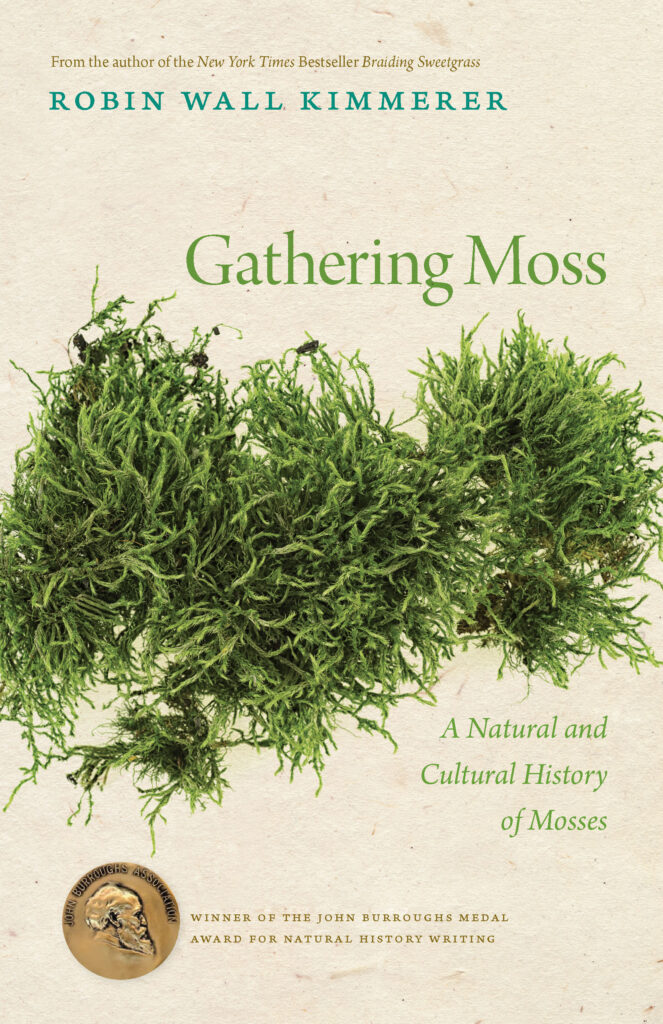
A deep dive back into the 20th reprint (2022) of Robin Wall Kimmerer’s collection of linked essays: “Gathering Mosses”
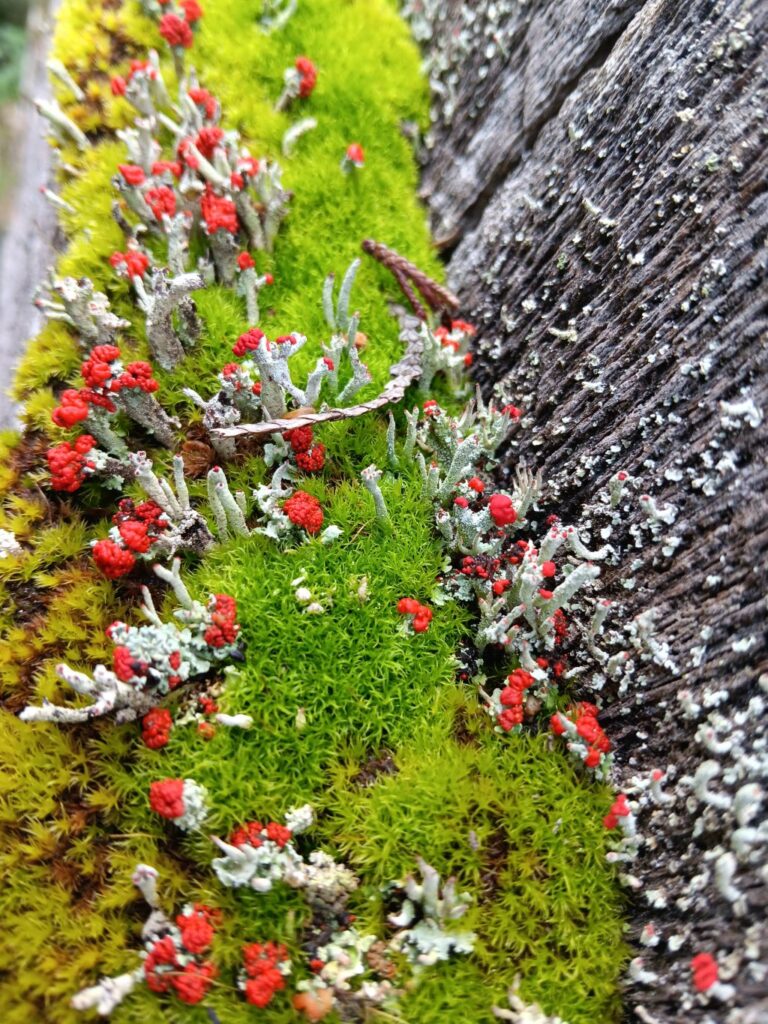
As an aspiring naturalist (?), I enjoy walking through our local forests in all seasons. During winter, the woods can seem dark, the clouds are often thick and low, and the daylight hours seem too short. But once I walk into a forest, it lights up with the varying shades of mosses. Under my feet, bits of wind-thrown branches are festooned with textures of mosses, and wrapped in pale lichens. Every rock and fallen log harbours so many types of mosses, I’m only beginning to recognize individuals.
That’s what drew me to Kimmerer’s collection of essays in the first place. Trying to understand what I was seeing. But I found so much more as I read each linked story-essay.
Gathering Mosses, by Robin Wall Kimmerer, is a collection of essays, threaded together by deep experience, scientific and indigenous knowledge, and infused with a sense of wonder. Although the book was published in 2003 and reprinted 20 times or more, I have reread it more than once since I discovered it four years ago.
The award-winning author introduces us to the complexity of what we might think of as a simple plant. The line drawing of the life cycle of a typical moss (p23) shows the complexity of reproductive structures (and that doesn’t include the structures of asexual reproduction). Her description of the randomness of fertilization helps us realize that the success of mosses is somewhat miraculous. The sperm is short-lived and dependent on water and often fails to meet up with the female eggs. A further complexity is explained later in the book, as Kimmerer explains factors that affect successful reproduction in the micro-world of the “boundary layer” (the warmer, still place between the land and the air currents) where mosses can thrive.
Kimmerer believes in the power of scientific research and asking questions about why or how, when and where. Yet she also demonstrates the value of indigenous approaches that involve listening, exploring and direct experience. She introduces students to the language of the microscope; so many terms to describe different leaf edges and textures that build a relationship with the plants and their environments. Leaves with large, coarse teeth are “dentate”; fine even teeth are “serrulate”.
Yet she encourages students to carry a hand lens to slow down and observe mosses constantly and think about what they see. She thinks of some mosses, like the diverse species of Dicranum, by the hairstyles they evoke (D.monatium-corkscrew curls or D.flagellare-buzzcuts).
Each essay focuses on different aspects of mosses, shared through stories about her research enlivened by personal anecdotes of friends, family and her experiences. Kimmerer describes how mosses succeed by their responses to the challenges of competition or environment and the power of “smallness” and ability to live where other organisms cannot. She marvels at the ability of mosses (and, surprisingly, tardigrades “waterbears” and rotifers) to dry out completely, withstand extremes of temperatures and seem dead (anabiosis) and still be resuscitated. But her stories also illuminate the complex connections mosses have with their immediate environments, the micro-creatures that live within their structures, and their effects (presence or absence) on entire ecosystems.
The final essays in Gathering Mosses present deeply moving stories of the impact of our careless destruction, clear-cutting forests or ripping apart ancient moss-covered landscapes to line flower baskets or decorate the estates of wealthy people. While research tells us about the important role that mosses and forests have in our world, it seems that not enough people understand the message.